
The Journal
FEATURED POSTS
visit our storefrontclean jewelry tips
KSFJ DESIGN PROCESS
setting cheatsheet
A Jewel Box of a Studio by Kellie Stonger Fine Jewelry Lands in Downtown Littleton
If you’ve walked the quieter stretch of Main Street in downtown Littleton lately, you may have noticed something new – and undeniably radiant. Nestled just across from Grande Station, a charming storefront now shimmers with the soft glow of gold and the promise of something personal. Welcome to The Pink Peacock on Main, the newly opened design studio of fine jewelry artisan Kellie Stonger.

If you’ve walked the quieter stretch of Main Street in downtown Littleton lately, you may have noticed something new – and undeniably radiant. Nestled just across from Grande Station, a charming storefront now shimmers with the soft glow of gold and the promise of something personal. Welcome to The Pink Peacock on Main, the newly opened design studio of fine jewelry artisan Kellie Stonger.
Long known for her bespoke heirloom designs and deeply personal custom process, Kellie has officially opened her first brick-and-mortar location – a longtime dream brought to life in collaboration with her parents, who lent both craftsmanship and design intuition to the space. The result is a jewel box of a studio: cozy, creative, and filled with meaningful detail.
A Studio with Soul (and Peacock Wallpaper)
From the moment you step inside, it’s clear this is more than a showroom. Bold pink peacock wallpaper sets the tone – a nod to the studio’s nickname and to the qualities peacocks symbolize: rebirth, pride, beauty, and grace. Every inch of the space reflects Kellie’s vision – not only as a jeweler, but as a connector, collaborator, and curator of meaningful moments.
“This space was intentionally created to spark creativity on every level,” Kellie shares. “It allows me to dream bigger, connect deeper, and welcome others into the creative journey in a way I couldn’t before.”
A Creative Hub for Women, Milestones, and More
In addition to hosting one-on-one client consultations (easily booked online through her website), Kellie has plans to open the studio up for community gatherings, artist collaborations, and even a women-in-business mastermind series called Werkin’ Moms – a playful nod to motherhood and entrepreneurship.
With help from Lindsey Silvestri, the Kellie Stonger Fine Jewelry team is expanding, bringing on talented consultants and designers who share a love for thoughtful design and meaningful connection.
There are also creative partnerships in the works, including with Haus of Jamin’s Benjamin Ortiz-Hill, who’s currently crafting a custom window display installation for the studio’s grand opening. Once complete, the space will officially launch with a celebratory event later this September.
A Moment Worth Capturing
One of Kellie’s favorite memories so far? “Sign Day.” After installing the studio’s signage, a passing stranger offered to take a quick photo for the family. That stranger turned out to be Bri, a professional photographer who happened to have her camera on hand. She ended up capturing some of Kellie’s favorite moments to date – serendipity at its finest.
Keep an eye out for the studio’s debut during Longer Tables on September 24 – a community-wide event where Main Street will be transformed into one long shared dining table. It’s the perfect setting for what The Pink Peacock on Main represents: beauty, belonging, and the stories that bring us together.
Whether you’re marking a milestone, redesigning a family heirloom, or simply passing through Littleton, Kellie’s new studio is a must-visit – an open door into a world of artistry, connection, and creativity.

The Scout Guide's 2024 Holiday Gift Guide for Her Featuring Kellie Stonger Fine Jewelry
As the holiday season approaches, gift-giving takes center stage, and what better way to show your love and appreciation than with a piece of exquisite jewelry? This year, Kellie Stonger Fine Jewelry has made a sparkling entrance into the festive season with the inclusion of their stunning emerald eternity band in The Scout Guide's 2024 Holiday Gift Guide for Her.
As the holiday season approaches, gift-giving takes center stage, and what better way to show your love and appreciation than with a piece of exquisite jewelry? This year, Kellie Stonger Fine Jewelry has made a sparkling entrance into the festive season with the inclusion of our stunning emerald eternity band in The Scout Guide's 2024 Holiday Gift Guide for Her. We are so excited!
Featured in The Scout Guide
Being featured in The Scout Guide’s Holiday Gift Guide is a testament to Kellie Stonger Fine Jewelry’s commitment to quality and design. The Scout Guide is known for curating only the finest local businesses and artisans, making it a go-to resource for those looking to shop thoughtfully this holiday season. The inclusion of the emerald eternity band not only highlights its stunning aesthetic but also positions it as a must-have for those who value craftsmanship and style.
A Jewel for Every Occasion
The emerald eternity band is a breathtaking piece that embodies elegance and sophistication. Crafted with meticulous attention to detail, this band features a continuous line of vibrant emerald-cut diamonds, symbolizing eternal love and commitment. Whether you’re celebrating a milestone, an anniversary, or simply the joy of the season, this ring is the perfect way to express heartfelt sentiments.
A Thoughtful Gift
When searching for the perfect gift, it’s important to find something that resonates on a personal level. The emerald-cut eternity band is a timeless piece that transcends trends, making it a cherished addition to any jewelry collection. Imagine presenting this exquisite band to a loved one, allowing them to wear a symbol of your affection throughout the years. Ready to get started? We are here to help!
This holiday season, let Kellie Stonger Fine Jewelry be your go-to gift provider for the special women in your life. With striking beauty and profound meaning, custom fine jewelry promises to dazzle and delight. Be sure to check out The Scout Guide's 2024 Holiday Gift Guide for Her to see this stunning ring alongside other exceptional finds. Celebrate the magic of the season with a gift that will be treasured for a lifetime!

Is Ear Styling the New Ring Stack?
Diamond stud earrings are truly a must-have accessory for every woman's jewelry collection, as they seamlessly add a touch of elegance and sophistication to any outfit, whether casual or formal. Here are some key points you should carefully consider to help you find the perfect pair or pairs that will suit your unique personal style and individual taste beautifully from Denver’s premier jeweler, Kellie Stonger Fine Jewelry.
We’re excited to take your ear stack from basic to truly brilliant with our thoughtfully curated collection of ear stack essentials. Whether you're a minimalist seeking subtle luxury in your accessories or a trendsetter craving striking, bold statements that captivate attention, Kellie Stonger Fine Jewelry has the essential pieces to help you express and showcase your unique style with epic ear styling. Let’s play with endless possibilities and turn heads together, one beautifully crafted stack at a time.
Check out our formula for ear stacks that are sure to turn heads.
studs
Every woman truly needs to have at least one pair of classic diamond studs in her jewelry collection for timeless elegance and versatile style. Diamond stud earrings are a timeless accessory that seamlessly blend elegance and simplicity. Featuring brilliant-cut diamonds set in secure metal settings, these earrings provide a versatile adornment that enhances both casual and formal attire. Their understated design allows for easy pairing with other jewelry, making them a staple in any jewelry collection. Available in various carat weights and metals such as white gold, yellow gold, or platinum, diamond studs cater to personal styles while exuding a sense of sophistication that never goes out of fashion. Whether as an everyday piece or for special occasions, they remain a symbol of elegance and enduring beauty.
earring jackets
Earring jackets offer a remarkable versatility that allows wearers to transform their look effortlessly. These stylish additions can enhance basic earrings, turning simple studs into statement pieces suitable for various occasions. With endless design options available, from elegant to playful, earring jackets provide a unique opportunity to express individual style and creativity. Whether for everyday wear or special events, their adaptable nature makes them a must-have accessory in any jewelry collection.


cuffs
Discover the allure of diamond cuffs, the ultimate accessory that combines elegance with versatility, all without the need for piercings. Perfect for any occasion, these exquisite cuffs can seamlessly transition from day to night, adding a touch of sophistication to both casual and formal attire. Designed to fit comfortably and securely, diamond cuffs allow for effortless styling, letting you express your individuality without the commitment. Whether worn alone for a minimalist statement or stacked for a bolder effect, diamond cuffs redefine modern luxury with their timeless appeal and adaptability. Elevate your jewelry collection with this must-have accessory that suits every personal style.


hoops
These versatile pieces can complement casual outfits or enhance formal attire, making them a worthwhile investment in your jewelry collection and the perfect addition to your ear styling. When incorporating diamond hoops, consider the size and style that best suits your aesthetic and lifestyle. Smaller hoops can provide a subtle shimmer, while larger ones make a bold statement. Mixing metals can add an interesting contrast, so don't hesitate to pair diamond hoops with gold or silver earrings in your stack.
huggies
Huggie earrings are a beautiful way to elevate your ear stack. Their close-fitting design gives a polished look while adding a touch of elegance to any outfit. Available in various materials and designs, huggies can range from simple and understated to bold and ornate, allowing for versatility in styling. For a balanced look, consider mixing different textures and finishes—pair gold huggies with silver studs or opt for gemstone-accented huggies alongside minimalist designs. This approach adds dimension to your ear stack while maintaining a cohesive aesthetic. Whether you prefer a classic look or something more adventurous, incorporating huggie earrings can elevate your personal style and create a unique statement.

Finding the Perfect Diamond Studs
Diamond stud earrings are truly a must-have accessory for every woman's jewelry collection, as they seamlessly add a touch of elegance and sophistication to any outfit, whether casual or formal. Here are some key points you should carefully consider to help you find the perfect pair or pairs that will suit your unique personal style and individual taste beautifully from Denver’s premier jeweler, Kellie Stonger Fine Jewelry.
Diamond stud earrings are truly a must-have accessory for every woman's jewelry collection, as they seamlessly add a touch of elegance and sophistication to any outfit, whether casual or formal. Here are some key points you should carefully consider to help you find the perfect pair or pairs that will suit your unique personal style and individual taste beautifully.
When choosing diamond stud earrings, you can consider factors like:


Setting Style
4-Prong Basket: 4-prong basket settings are perhaps the most popular setting for diamond stud earrings. In this setting, the prongs surround your diamond, securely cradling them in place. This is an elegant, classic style that lets your diamonds shine.
3-Prong Martini: 3-prong martini settings give a different, more streamlined silhouette, as the diamond sits more snugly in the triangular setting. 3-prong settings are a great option for those who love this sleek variation on the classic prong setting.
Bezel Set: Bezel settings offer a more modern look. In a bezel setting, the edges of the top of your diamond are enclosed within the setting, creating a simple and sleek appearance. But bezel settings are not only stylish— they’re also incredibly secure. Because your diamonds are totally enclosed in the setting, they have additional protection from any bumps, drops, or scrapes.
Diamond shape
Popular shapes for stud earrings include round and princess cut, which are known for their classic, symmetrical look and sparkle. Round cut studs have a more traditional look, while princess cut studs have a more edgier style. Cushion cut and oval-shaped diamonds are also becoming more popular, especially with younger people, because of their vintage and antique vibe.
Size
The size of diamond stud earrings you choose depends on your personal preferences and budget, as well as your face shape and the size of your earlobes. For everyday wear, a good size is between 1/2–1 carat, while 2 carat studs are better for special occasions. If you have a smaller face or petite earlobes, you might want to consider smaller studs, while people with more prominent features might want to go larger.
Color grade
G and H grade diamonds are generally recommended, as they're still shiny and sparkle, but cost less than D, E, or F grades. You can also consider going as low as VS2 or SI1 in clarity grade.

How to Expertly Layer Your Jewelry
Layering jewelry can elevate your style and add a personalized touch to any outfit. Here’s how to expertly layer your pieces like a pro from Denver’s premier jeweler, Kellie Stonger Fine Jewelry.

Layering jewelry can elevate your style and add a personalized touch to any outfit. Here’s how to expertly layer your pieces like a pro:
Start with a Base
Choose one focal piece to serve as your base. This could be a longer necklace or a bold statement piece. Ensure it sits comfortably against your skin and provides a foundation for layering.
Balance Statement Pieces
If you’re featuring a bold item, such as oversized earrings or a chunky ring, keep other pieces more subdued to maintain balance. This way, your accessories enhance your overall look rather than compete for attention.
Mix Lengths
Select chains and pendants of varying lengths. For example, pair a choker with a mid-length necklace and a longer piece. This staggered look creates visual interest and prevents your jewelry from looking too cluttered.
Vary the Materials
Combine different metals and textures. Mixing gold, silver, and rose gold can add depth to your arrangement. You might also consider integrating materials such as leather or fabric for a more diverse aesthetic.
Incorporate Different Styles
Don’t be afraid to combine delicate pieces with chunkier jewelry. For instance, a dainty necklace can contrast beautifully with a thicker chain or a pendant, adding a modern touch to your look.
Use Bracelets Wisely
When layering bracelets, aim for a mix of styles such as bangles, cuffs, and charm bracelets. Ensure they stack harmoniously while allowing for mobility and comfort on your wrist.
Experiment with Placement
Play around with the placement of your pieces. Necklaces can be worn nestled, while rings can be stacked on different fingers. Avoid symmetry— asymmetrical arrangements are more visually compelling.
Choose a Theme
Create a cohesive look by selecting jewelry that shares a common theme or color palette. Whether it’s gemstones, textures, or a specific color, this can tie your layered pieces together seamlessly.
Trust Your Instincts
Ultimately, layering is about personal expression. Trust your aesthetic instincts and adjust your layers until you feel confident and happy with your style.
Don’t Overdo It
Lastly, remember that less can sometimes be more. If you're unsure, start with a few carefully chosen pieces and gradually add more as you become comfortable with the layering technique.

Jewelry Inspection 101
At KSFJ, we're committed to helping you keep your fine jewelry looking and feeling its best. Contact us today to schedule your free inspection service and experience the peace of mind that comes with knowing your jewelry is in great hands.
At KSFJ, we understand how much your fine jewelry pieces mean to you. That's why we offer a free inspection service to help ensure that your pieces remain in pristine condition over time. Regular inspections preserve the beauty and longevity of the piece by identifying any loose gemstones, weak clasps, or other potential issues that may lead to loss or damage.
Why is it important to have your jewelry inspected? We believe that your jewelry should be worn and enjoyed. Through normal wear, jewelry can experience damage, and even small issues can lead to bigger problems if left unchecked. Our inspection service allows our team of experts to carefully evaluate your pieces, identifying any potential issues and address them before they become more serious. Through this practice, we allow for a bit of preventative medicine to ensure longevity.
How often should you have your jewelry inspected? Just like your home needs deep cleanings, so does your fine jewelry. We recommend bringing your pieces in for inspection at least once a year. Our highly skilled technicians have an eye for detail and are trained to identify even the smallest imperfections or signs of wear.
How does the inspection service work? Our check up service is completely free of charge for all KSFJ pieces. After a thorough cleaning (get ready for all the sparkles!) and inspection we will notify you if anything needs to be adjusted. We utilizes state-of-the-art magnification equipment to take a truly up-close-and-personal look at your precious pieces.
At KSFJ, we're committed to helping you keep your fine jewelry looking and feeling its best. Contact us today to schedule your free inspection service and experience the peace of mind that comes with knowing your jewelry is in great hands.
Diamond Grading Reports: Understanding Diamond Grading and Cut Grades (via GIA)
A GIA diamond grading report provides an objective, unbiased assessment of the diamond’s 4Cs – and can help you make the right purchase decision.
Diamond jewelry shopping can be an exciting and fun experience. The gemstones glimmer at you from the case and it can be hard to choose just the right one. If you’re looking for a diamond, remember the importance of learning about the 4Cs of diamond quality and getting an independent diamond grading report. A GIA diamond grading report provides an objective, unbiased assessment of the diamond’s 4Cs – and can help you make the right purchase decision.
Each GIA report is unique to the diamond it describes, and contains a wealth of information to help you understand the features and qualities of your specific diamond. In a prior post, we explored the clarity information on GIA Diamond Grading reports, including clarity grades and scales, and plotting diagrams, in addition to GIA grading methods for clarity.
Here, we will take a deeper look at how diamond cut grading information is presented for standard round brilliant diamonds in the D-to-Z color range and describe what goes into GIA’s diamond cut grading process. With the information in this post, you will learn what diamond grades are and understand how diamond cut is presented in a GIA diamond grading report.
I. The Factors That Influence Diamond Cut Quality
Think of a diamond as an arrangement of tiny angled mirrors. A standard round brilliant cut diamond has 57 or 58 of them – what gemologists call “facets.” These facets reflect light off of each other, bounce light into the diamond, break up the light into a spectrum of colors, and return light back up to your eye.
It’s an incredible light show that changes with the slightest movement by you or the diamond. This is how light affects a diamond’s appearance.
Facets are the key to a diamond’s cut quality. Their angles, size, and arrangement to each other, as well as the quality of their surfaces in addition to other factors, are critical in delivering that sparkle you expect to see when looking at a diamond face up.
Refer to this diagram, GIA Diamond Anatomy, for a closer look at the some of the elements that inform a diamond’s cut grade.
In determining a cut grade for standard round brilliant cut diamonds in the D-to-Z color range, GIA takes into account:
How well the diamond interacts with light:
Its brightness or how white light reflects from the diamond
Its fire or the scattering of white light in all the colors of the rainbow
Its scintillation or the pattern of light and dark areas caused by reflections within the diamond
How well the diamond is designed, faceted, and crafted:
The diamond’s weight relative to its diameter
The diamond’s girdle thickness which affects its durability
The symmetry of the diamond’s facet arrangement, including the angles and relative positions of all the facets
The quality of the polish on the facets
Together, these factors determine a diamond’s overall cut grade.
GIA Cut Grading Methods
Under tightly controlled lighting and viewing conditions, trained graders use a combination of highly calibrated optical measuring devices and visual observations to capture the data relevant to assessing a diamond’s overall cut quality.
An optical measuring device captures 400 contour images of the diamond and reassembles them into a 3-D image of the stone, from which it extracts the data it needs to determine the diamond’s overall measurements and its average proportions.
Visual observations are used to evaluate polish, symmetry, and girdle thickness.
How GIA Reports Describe Cut
GIA provides an overall cut grade for standard round brilliant cut diamonds in the D-to-Z color range. The cut grade appears as either: Excellent, Very Good, Good, Fair, or Poor.
For a diamond to be graded as ‘Excellent’, the top category, a diamond must exhibit an even pattern of bright and dark areas.
Additional Cut-Related Information on GIA Reports
In addition to an overall cut grade and scale, a GIA diamond grading report provides deeper insight into the variables that affect your diamond’s cut grade. Get to know them below:
SHAPE & CUTTING STYLE:
Diamond shape refers to the outline of the stone when viewed face up. Cutting style refers to its facet arrangement. For example, the terms “round brilliant” describe a round-shaped stone faceted in the brilliant style with 57 – 58 facets
MEASUREMENTS:
Described in millimeters to two decimal places, a diamond’s dimensions are listed as “minimum diameter – maximum diameter x depth” for round diamonds and “length x width x depth” for fancy-shaped diamonds. The carat weight of the diamond relative to its diameter is how diamond graders determine the weight ratio, which is one of the factors the influence a diamond’s overall cut grade.
Remember the tiny mirrors we call facets? A diamond’s proportions, or the angles and relative measurements of the diamond’s facets, contribute to their interaction with light. Every GIA diamond grading report provides a diagram showing the diamond’s proportions. The diagram also describes the diamond’s girdle thickness, which affects durability.
TIP: As you’re comparing diamonds, it’s important to remember that diamonds with different proportions can have similar cut grades. So you should look beyond the numbers on a report and view the diamond in person to see if it’s the right choice for you.
POLISH:
Describes the overall quality and condition of the facet surfaces, including an evaluation of any blemishes resulting from the polishing process or during wear. Polish is rated on a scale ranging from Excellent to Poor.
SYMMETRY:
Evaluates the exactness of the diamond’s outline, and the shape, placement, and alignment of its facets, and is assessed on a scale of diamond grades ranging from Excellent to Poor. A round brilliant diamond should have a symmetrical outline. If you were to think of it as a pie with eight slices, all eight sections should match each other.
TIP: Ex Ex Ex or Triple Ex: You’ll hear these terms to describe diamonds with an Excellent overall cut grade, and Excellent polish and Symmetry grades.
Non-standard Round Brilliant Cut Diamonds
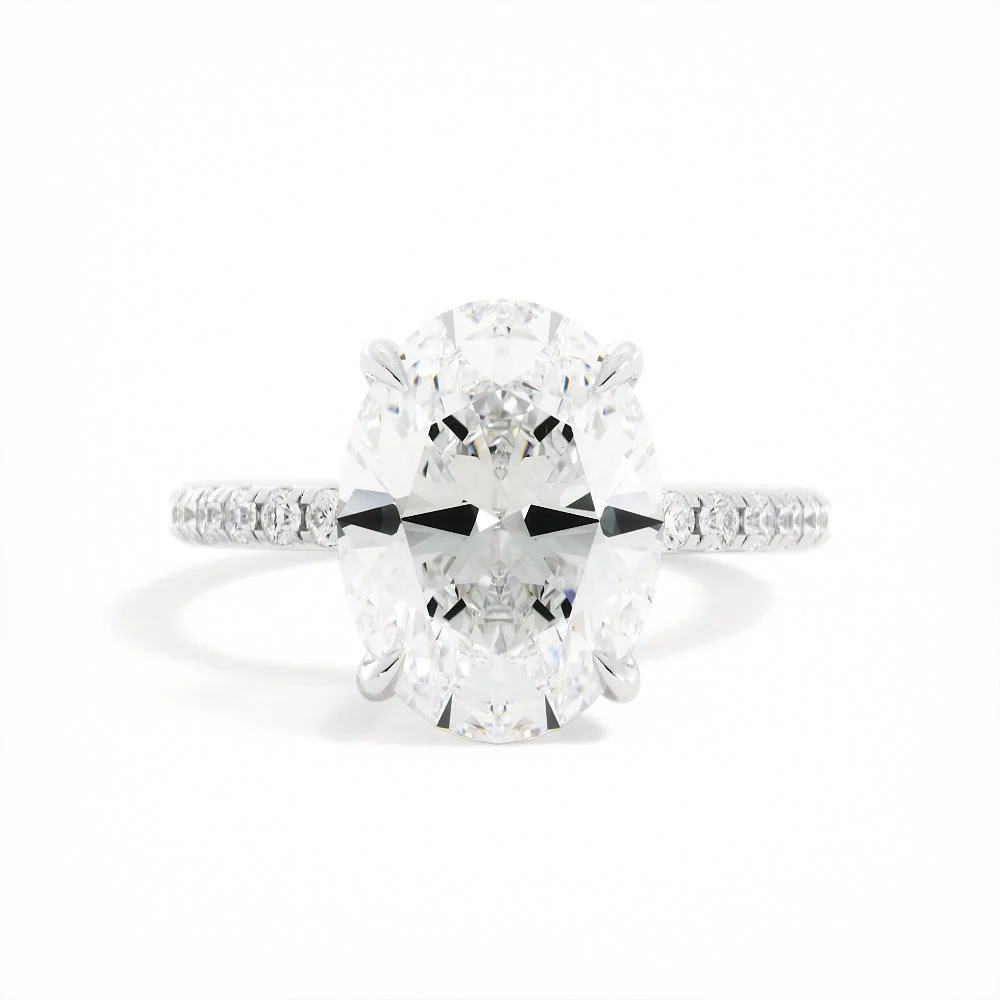
At this time, an overall cut grade for non-standard round brilliant diamonds or fancy shaped diamonds such as rectangular, oval, or square, is not available on GIA grading reports. But reports do contain an assessment of the diamond’s polish and symmetry; a description of its shape and cutting style; its measurements; and a simplified proportion diagram containing a description of girdle thickness.
Diamond Cut – Beauty is in the Eye of the Beholder
The overall beauty of a diamond lies in its cut quality, but cut is the most difficult and complicated “C” to assess because many variables go into determining a cut grade. When GIA developed its diamond cut grading system, it conducted tens of thousands of observations of real diamonds, with people providing input as to what they thought were the best looking diamonds.
So, the system tells you what most people like, not necessarily what you may like. This is important as there are many visual choices to consider. Carefully observe those diamonds that have high cut grades – they are often a little different from each other. You may even prefer a diamond with a lower cut grade.
Ultimately, beauty is in the eye of the beholder. Ultimate, beauty is in the eye of the beholder, so you should use a grading report in conjunction with your own visual observation to gauge how well a diamond performs for you.

How to Clean Your Diamond Jewelry
Tips to keep your diamond jewelry sparkling.
Diamonds are among the hardest natural minerals on Earth, yet they require special care to keep them shining and looking their absolute best. In fact, a diamond’s sparkle can be lost by the mere touch of a finger, which can cause dirt to collect on the diamond.
The best way to keep your diamond looking its best: clean your diamond regularly.
A simple plan to keep your diamond jewelry looking beautiful is to soak each diamond in an ammonia-based household cleaner (such as window cleaner) overnight, once a week. The next morning, remove the diamond from the cleaner and brush it with a soft, clean toothbrush (a new brush reserved exclusively for cleaning your diamond) to remove any leftover dirt. Take extra care to brush the back of the diamond, because this area tends to collect a lot of oil and dirt.
While the instructions above will keep your diamond sparkling, there are a few things to be aware of:
Not all gemstones are as hard as diamonds, and some can easily be scratched with a toothbrush. Be sure to check the best method for cleaning your particular gemstone.
Fragile settings and older estate jewelry may not respond well to the scrubbing of a toothbrush, so use a soft touch.
If you haven’t had your ring setting inspected, be aware that diamonds can work loose from their settings if the settings aren’t secure
You’ll want to find a safe place to clean your diamond. If it can be avoided, do not clean your jewelry in or near the sink. If a sink is the only option for cleaning your jewelry, be sure to cover the sink drain so that you can protect your jewelry from going down the drain. Also, use a rubber sink mat when possible to prevent jewelry from breaking or chipping if dropped.
Finally, avoid harmful solutions. Chlorine (as in household bleach) or abrasives (such as household cleansers or toothpaste) should never be used when cleaning diamonds, especially those set in jewelry. These types of products can erode some of the metals often used in diamond settings, and they may loosen prongs or even dissolve the metal completely.
Keeping your diamond clean is a good step in protecting your diamond. While a home method is perfectly acceptable, you should consider having your diamond cleaned periodically by a professionally trained jeweler.
Your jeweler can use one of two more thorough options for cleaning your diamond: a steam cleaner or an ultrasonic cleaner. An ultrasonic cleaner sends high-frequency sound waves through a liquid solution to remove the dirt and build-up, and a steam cleaner will use high-pressure steam to remove dirt and build-up.

Ring Setting Cheatsheet
While there are an unending variety of patterns, details and metal choices, there are four basic setting types you are likely to encounter while buying an engagement ring.
While there are an unending variety of patterns, details and metal choices, there are four basic setting types you are likely to encounter while buying an engagement ring:
Solitaire – A single stone. Still the most popular choice when it comes to buying engagement rings. The head secures the diamond. Prongs allow the diamond to catch the most light. A four-prong-setting shows more of the diamond, but a six-prong setting is often more secure.
Sidestone – Diamonds or other gemstones, flank the main stone for additional sparkle or color. Popular sidestone settings include ‘channel’, which protects stones by keeping them flush, and ‘bar-channel’, which allows more light to enter the sidestones.
Three Stone – One diamond for the past, one for the present, and one for the future. Typically, the center diamond is larger than the two side stones.
Pavee (pah-vey) or Halo – The main stone is surrounded by tiny diamonds to add sparkle and the illusion of greater size.
As to actual setting design, consider her lifestyle, and how well a certain setting will fit into it. If she’s more active or outdoorsy, look for lower profile, less ornate, more sturdy choices, which are less likely to get knocked or caught on things. If she’s more of a glamour girl, look for statement settings, with a higher stone profile and more intricate ring detailing or unique motif.

Custom Design with KSFJ
Ready for an experience that you will treasure forever? Let’s get started! Designing a piece of jewelry or an engagement ring is an expression of your personal style and individuality and I am here to help and support you through the entire process. Together, we craft one-of-a-kind custom jewelry with clear communication and hands on expertise.
An experience unique to you from start to finish.
Ready for an experience that you will treasure forever? Let’s get started! Designing a piece of jewelry or an engagement ring is an expression of your personal style and individuality and I am here to help and support you through the entire process. Together, we craft one-of-a-kind custom jewelry with clear communication and hands on expertise.
With years of experience working on a wide array of project, I have narrowed my process to five steps:
sketches
CAD rendering
wax/resin model
stone selection
creation + quality control try-on (my personal favorite!)

The 4 Cs of Diamonds
Each diamond is unique and is a miracle of time, place and change. And each has specific qualities that establish its value.
Each diamond is unique and is a miracle of time, place and change. And each has specific qualities that establish its value.
Until the middle of the twentieth century, there was no agreed-upon standard by which diamonds could be judged. GIA created the first, and now globally accepted standard for describing diamonds: Color, Clarity, Cut and Carat Weight. Today, the 4Cs of Diamond Quality is the universal method for assessing the quality of any diamond, anywhere in the world. The creation of the Diamond 4Cs meant two very important things: diamond quality could be communicated in a universal language, and diamond customers could now know exactly what they were about to purchase.
Color
Understanding what diamond color means helps in choosing the right diamond. Interestingly, the diamond color evaluation of most gem-quality diamonds is based on the absence of color. A chemically pure and structurally perfect diamond has no hue, like a drop of pure water, and consequently, a higher value. GIA’s D-to-Z diamond color-grading system measures the degree of colorlessness by comparing a stone under controlled lighting and precise viewing conditions to masterstones of established color value.
Many of these diamond color distinctions are so subtle that they are invisible to the untrained eye; however, these distinctions make a very big difference in diamond quality and price.
Clarity
To understand diamond clarity, we must first understand how diamonds are created. Natural diamonds are the result of carbon exposed to tremendous heat and pressure deep in the earth. This process can result in a variety of internal characteristics called ‘inclusions’ and external characteristics called ‘blemishes.’
Evaluating diamond clarity involves determining the number, size, relief, nature, and position of these characteristics, as well as how these affect the overall appearance of the stone. If you are trying to determine what is the best clarity for a diamond, remember that no diamond is perfectly pure. But the closer it comes to purity, the better its clarity.
Cut
Diamonds are renowned for their ability to transmit light and sparkle so intensely. We often think of a diamond’s cut as shape (round, heart, oval, marquise, pear), but what diamond cut actually does mean how well a diamond’s facets interact with light. Precise artistry and workmanship are required to fashion a stone so its proportions, symmetry and polish deliver the magnificent return of light only possible in a diamond.
Brightness: Internal and external white light reflected from a diamond
Fire: The scattering of white light into all the colors of the rainbow
Scintillation: The amount of sparkle a diamond produces, and the pattern of light and dark areas caused by reflections within the diamond.
Carat Weight
To put it simply, diamond carat weight measures how much a diamond weighs.
A metric “carat” is defined as 200 milligrams. Each carat is subdivided into 100 ‘points.’ This allows very precise measurements to the hundredth decimal place. A jeweler may describe the weight of a diamond below one carat by its ‘points’ alone. For instance, the jeweler may refer to a diamond that weighs 0.25 carats as a ‘twenty-five pointer.’ Diamond weights greater than one carat are expressed in carats and decimals.
While now you know what carat means, it’s also important to remember that a diamond’s value is determined using all of the 4Cs, and not just carat weight.
Vivamus pellentesque vitae neque at vestibulum. Donec efficitur mollis dui vel pharetra.